Importance of Early Reading
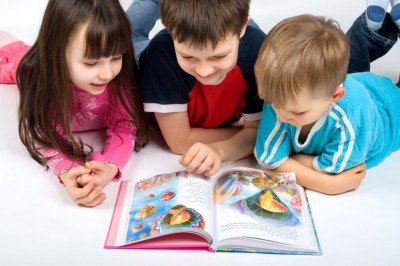

Many children today grow up in homes where the parents are not role models when it comes to reading. Often, children don’t see their parents reading so much as a newspaper or a magazine, not to mention a book. Worse, I think, is the fact that children in such homes are not read to. In our home, my wife and I would take turns reading to our son and did so often. As he got older, we read as a family with Mark taking his turn in reading to us.
In fact, we read to him before he even knew what words and stories meant. As an infant, he was too young to understand the words, but he hung on every one of them as we read children’s books aloud. He came to know that when Mommy or Daddy got out a book and picked him up, something special was about to happen. With him securely and comfortably cradled in our laps, we read softly. He would gaze up into our eyes as if he understood every single word perfectly, even though he had no real vocabulary yet. All he knew was that when a book came out, he would hear soft, gentle tones and be held securely--nirvana for any baby. It set the stage for school success and a lifetime of reading enjoyment.
As his vocabulary developed, he began to understand the story line better, but he was also drawn to the pictures as he heard the words. I’m sure Henry the Duck is a character he can still picture in his mind to this day.
Books help children learn through words, pictures, and repetition. “Big A, Little A, What begins with A?” over and over again (from Dr. Seuss) was sometimes tedious. But nevertheless, our son learned his alphabet early and developed a vocabulary that exceeded the number of words considered typical for his age. Vocabulary is an essential precursor to early reading.
I can tell you for a fact that children who struggle to read have a difficult time in school and rarely recover academically. Children who continue to struggle by the third grade often do not improve their academic standing relative to their peers throughout their high school years. The point is, if you as a parent (or grandparent), set the stage early, you have the power to change your child's life for the better.
As a fourth-grade teacher, I used to read to my class each day before lunchtime. As I would reach for the book we were reading and sit on the floor with them, they hung on every word. Kids love to be read to and become immersed in the story. Seeing and hearing you read to them will make them want to pick up other books and re-create that magical world for themselves.
Be a role model. Let your children see you reading the newspaper, magazines, books everyday. Young children want to grow up to be just like you. Show them the value of reading.
For one week, try setting aside 30 minutes each day (kids love routines) and read to your child(ren). Make it an important, special part of their day. You'll feel closer to your kids and your children will become excited about reading. What could be better?
On a Saturday morning, take your child to the children's section of your local public library. Allow them the pleasure of discovering their own favorite books and pursuing their own interests. I'll bet you go back more than once.
Form the habit. Enjoy your childhood favorites again and watch the wonder in the eyes of your children as they hear those stories for the very first time. Let me know how you did.
Archived Comments
Carolyn Griess — Oct 18, 2010
A recent report by the Albert Shanker Institute reports: "One estimate suggests that children from typical middle-class families experience 1,000 hours of book-reading before entering first grade, while children from low-income families may only experience 25 hours." ("Preschool Curriculum: What's in it for children and teachers" 2009). I'm not necessarily advocating for recording how many hours your little one sits on your lap and hears a good story, but get in as much as you can.... and read to whomever might be in your home.
Steven Melnick — Oct 18, 2010
A stark contrast to be sure. Thanks for the comment.
Parakeet — Oct 19, 2010
I'd like to add that the child should never be forced to listen to a book she doesn't like, even if the parent thinks the book is "good for them" or that the child "will learn something." Reading together should be a pleasure for both. If it isn't, the goals of drawing the parent and child together and fostering good reading skills will be wasted. Worse, the child may avoid reading as something unpleasant and boring. If the child's interest isn't grabbed by the end of the first chapter, put the book away and find another that engages him.